Translate

Showing posts with label Grade 3. Show all posts

Sunday, 3 September 2017

Grade 3 : Ukulele

The ukulele is a very good first instrument for children, however, you must think of it as a real instrument and not consider it an introductory instrument that is generally easy to play. Although the ukulele is a fretted string instrument, it is a completely different instrument than the guitar. 

Parts of a Ukulele


Tuning


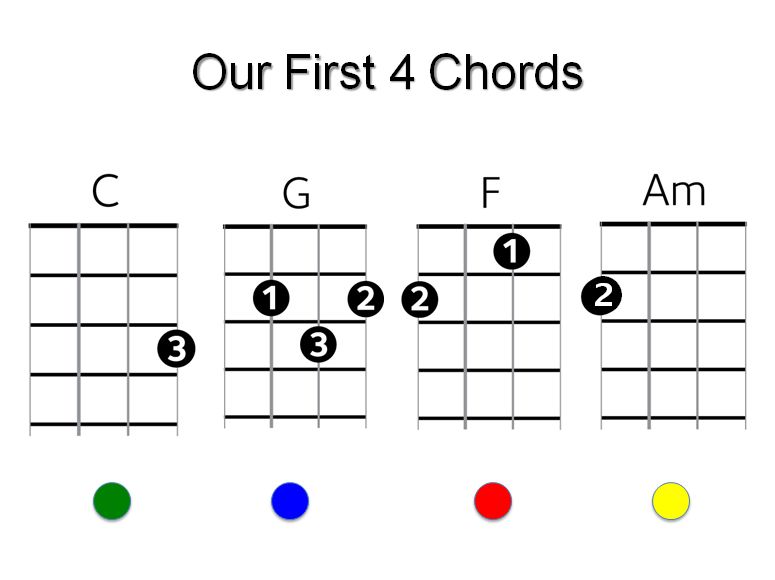
Chords


You Are My Sunshine


Strumming Patterns


Monday, 21 September 2015

Hand Staff


The hand staff or, the Guidonian hand—was first used by Guido D’Arezzo (c. 991-c. 1033). You can use your hand staff to practice saying and remembering the letter names of the lines and spaces of the staffs. If you hold up one hand and turn it sideways, the five fingers on that hand represent the five lines of a staff. And, if you spread those five fingers apart slightly, then the gaps between those fingers represent the four spaces of the staff.

REMEMBER THAT WE ALWAYS COUNT LINES AND SPACES AND SAY THE LETTER NAMES OF THE LINES AND SPACES FROM THE BOTTOM UP, NEVER FROM THE TOP DOWN!!! 

The Grade 3 students had a wonderful time in class designing their own Guidonian Hand. Here are some of their beautiful work!


Thursday, 27 August 2015

The Staff

The staff consists of five lines and four spaces. Each of those lines and each of those spaces represents a different letter, which in turn represents a note. Those lines and spaces represent notes named A-G, and the note sequence moves alphabetically up the staff.

Treble Clef

There are two main clefs with which to familiarize yourself; the first is a treble clef. The treble clef has the ornamental letter G on the far left side. The G’s inner swoop encircles the “G” line on the staff. The treble clef notates the higher registers of music, so if your instrument has a higher pitch, such as a flute, violin or saxophone, your sheet music is written in the treble clef.  Higher notes on a keyboard also are notated on the treble clef.
We use common mnemonics to remember the note names for the lines and spaces of the treble clef. For lines, we remember EGBDF by the word cue “Every Good Boy Does Fine.” Similarly for the spaces, FACE is just like the word “face.”

Bass Clef

The line between the two bass clef dots is the “F” line on the bass clef staff, and it’s also referred to as the F clef. The bass clef notates the lower registers of music, so if your instrument has a lower pitch, such as a bassoon, tuba or cello, your sheet music is written in the bass clef. Lower notes on your keyboard also are notated in the bass clef.
A common mnemonic to remember note names for the lines of the bass clef is: GBDFA “Good Boys Do Fine Always.” And for the spaces: ACEG, “All Cows Eat Grass.”


Wednesday, 12 August 2015

Welcome Back (2015/2016)


Welcome back, Music Cave students!  I am so excited for a new school year and to be writing in my blog again. 

The new National Core Arts Standards, which were just released in June 2015 focus on creating music, performing music, responding to music, and connecting music to other experiences.  Feel free to read more about the new standards here, or just admire the posters below.


Now that the room is ready, I look forward to seeing all of the Music Cave students in music class and to meeting their families at the RAS Open House on Thursday, August 20, 2015 from 3.30pm to 5.00pm.

Happy Singing!

Thursday, 7 May 2015

Grade 3 - Lesson 3 (Q4) (Lion King)


Students have begun the Disney adventure and now we will embark on the Lion King unit. Students will be learning a fun dance, singing, playing the xylophone and percussion instruments to "The Lion Sleeps Tonight". 


XYLOPHONES

PERCUSSION INSTRUMENT RHYTHM


CHORDS

AFRICAN INSTRUMENTS


Tuesday, 14 April 2015

Grade 3 - Lesson 1 (Q4) (Solo Singing)


Students learn to sing ”Rocky Mountain”. Memorize the lyrics for the song  and be prepared to sing the song as a solo to the class on Friday, May 8. You will be assessed on proper singing posture, diction and how well you know the words.


Task Objectives

  • Using their singing voice, students will sing correct pitches, rhythm and tempo, with expression and appropriate vocal technique.
  • Students will demonstrate an understanding of the criteria that are used to evaluate vocal performance by evaluating their own performance. 
Enduring Understandings

  • Singing a song is communicating an idea.
  • The way musicians apply technical skills affects the quality of a performance.
  • Singers can improve by listening to and evaluating their own singing and the singing of others. 
Essential Questions

  • How do I do my best singing
  • How do I demonstrate the difference between my singing voice and speaking voice? 
  • When I listen to my self sing, for what do I listen? 

                                                        Rocky Mountain


Rocky mountain, rocky mountain, rocky mountain high,
When you're on that rocky mountain, hang your head and cry.


Refrain

Do ,do, do, do, Do remember me.
Do, do, do, do, Do remember me.


Stormy ocean, stormy ocean, stormy ocean wide,
When you're on that stormy ocean, there's no place to hide.


Refrain


Sunny valley, sunny valley, sunny valley low,
When you're in that sunny valley sing it soft and low.


Refrain